

Reach-In Closet Design: Depths, Layouts and Organizer Ideas
Dave Kushner6 min read
Filed underCustom closet systems
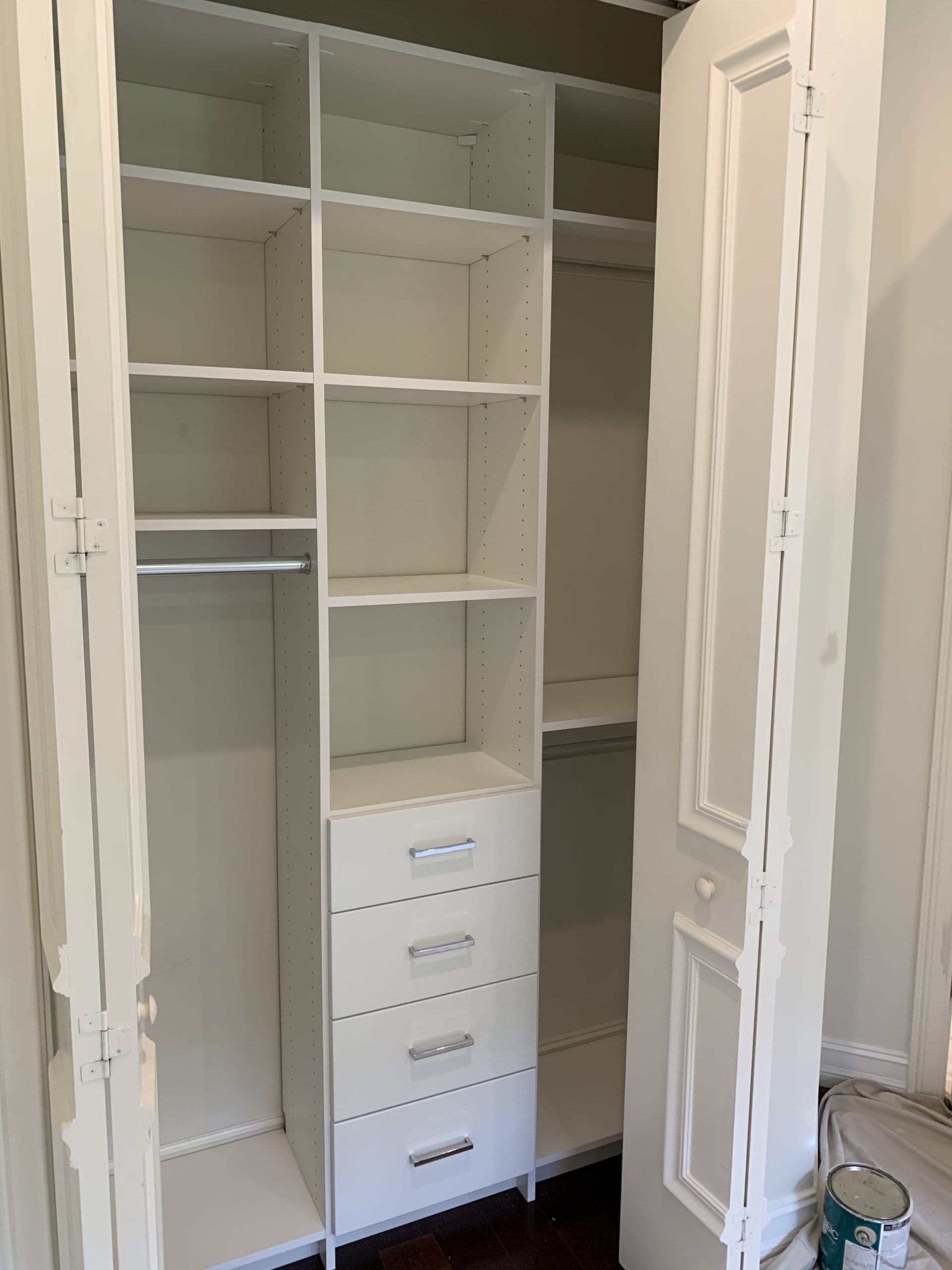
A good reach-in closet design starts with depth: about 24 inches lets hangers clear the back wall and the doors, and 20 inches is a workable minimum. Inside, most reach-ins work best with double-hang rods, a tower of shelves or drawers, and a top shelf, arranged so the doors never block a drawer.
Reach-in closets are the bedroom, hall, coat and linen closets found all through most homes, and they're where a little planning pays off most. This guide covers dimensions, layouts and organizer ideas. For walk-ins, kids' closets and the rest, see our custom closet systems overview.
Key takeaways
- Plan on 24 inches of depth for hanging clothes. Under about 22 inches, hangers may not fit facing the front.
- Double-hang rods roughly double the hanging space for shirts, jackets and folded pants.
- Doors decide the layout: drawers have to sit where a door can't block them.
- The side walls beside the opening, called returns, hide corners that need a plan.
- Pull-out baskets, shoe shelves, a valet rod and lighting do more in a small closet than extra shelves.
Reach-in closet dimensions that matter
| What you're planning | Typical dimension | Reference |
|---|---|---|
| Closet depth | 24 in comfortable; 20 in minimum | dimensions.com |
| Depth for bulky coats | up to 28 in | Hunker |
| Too shallow for front-facing hangers | under 22 in | Hunker |
| Shelves for shoes and small items | 12 in deep | dimensions.com |
| Drawers for folded clothes | 18 in deep minimum | dimensions.com |
| Single rod | 66 in | Bob Vila |
| Double-hang rods | 81 3/4 in and 40 1/2 in | Bob Vila |
| Lower rod for a young child | 30 in | Bob Vila |
dimensions.com gives 24 inches as the comfortable depth for a reach-in and 20 inches as the minimum. Hunker adds that a coat closet may want 28 inches. The sources differ at the low end: Hunker says a closet under 22 inches deep isn't deep enough for hanging clothes, so test a hanger before you plan a rod in a 20- to 22-inch closet. In a shallow closet, use shelves, drawers and hooks instead of a rod, or turn it into linen or pantry storage.
Plan the inside around the doors
Doors shape a reach-in more than anything else. dimensions.com lists sliding, bifold and sliding pocket doors as the common types, and each changes where things should go.
| Door type | What you can reach at once | Layout tip |
|---|---|---|
| Sliding (bypass) | About half the opening | Put drawers at the ends, not in the middle where the panels overlap |
| Bifold | Nearly the full width | Keep drawer fronts clear of the folded panels |
| Hinged | The full opening | Use the back of the door for hooks or a mirror |
| The full opening | Nothing swings, so the whole front is usable |
Then look at the returns, the short walls on either side of the opening. Hunker recommends returns of 12 inches or less, because anything deeper creates corners you can't reach. If yours are deeper, run the rod or shelves into the corner, or use corner shelves for things you reach for less often.
Reach-in layouts that work
Bedroom closet
Double-hang rods on one or both sides of a center tower of shelves and drawers is the classic reach-in layout. It roughly doubles the hanging space for shorter clothes and gives folded items a home without a dresser. Check that the tower lines up with a door opening.
Long hang plus double hang
If you own dresses, long coats or suits, give one end a single rod at full height and use double hang for everything else. Measure your longest garment first so the long-hang section is wide enough.
Linen closet
Swap rods for adjustable shelves and a few drawers or pull-out baskets. Deep shelves swallow towels and sheets, so keep stacks short and labeled.
Coat and entry closet
Hooks for bags and leashes, a shelf for hats, a rod for coats and shoe shelves at floor level. Hunker's 28-inch depth matters here, because bulky coats need the extra room.
Kids' closet
Start with a low rod a child can reach, about 30 inches for a young child according to Bob Vila, and adjustable shelves that can move up as they grow. Our kids' closets page shows more ideas.
Organizer ideas for small closets
In a reach-in, the right accessories do more than extra shelves:
- Pull-out baskets for socks, workout clothes or toiletries in a linen closet.
- Shoe shelves or shoe fences so pairs stay in rows instead of a pile on the floor.
- A valet rod for tomorrow's outfit or dry cleaning.
- Belt, tie and scarf racks mounted to the side of a tower.
- Drawers with dividers or jewelry trays for small things that get lost on shelves.
- A hamper built into the tower.
- LED lighting, which matters more in a reach-in than anywhere else because the door and your body block the room light.
You can see the options on our in-home accessories page. For a small closet that needs to work more like a walk-in, a Lazy Lee revolving valet unit combines drawers, shelves and hanging space in one turning unit.
Small reach-ins are where a custom layout shows. Verna W. wrote, "I highly recommend this company for custom closets, especially if yours are small like mine were."
Measure before you plan
- Measure the inside width wall to wall at the back, and the width of the door opening.
- Measure the depth from the back wall to the inside of the closed door.
- Measure the ceiling height and note any soffit or attic hatch.
- Measure how far each return extends beside the opening.
- Note the door type and any outlets, switches or vents inside.
Precise numbers matter in a closet this size. Chris T. wrote that the owner "took very precise measurements of each closet" before designing three bedroom closets and two linen closets.
Get a reach-in designed for your space
Book a free in-home design consultation. Your designer measures each closet, builds a 3D design with you, checks that drawers clear the doors, and gives you a quote. You choose the finish, from White and Antique White to Tahoe, Dakota and Licorice, in our colors and styles.
Sources
- dimensions.com, Reach-In Closets. Accessed October 9, 2026.
- Wanda Thibodeaux, What Are Standard Closet Dimensions?, Hunker, updated March 19, 2018. Accessed October 9, 2026.
- Manasa Reddigari and Bob Vila, This Is the Perfect Height for a Closet Rod, Bob Vila, updated October 29, 2024. Accessed October 9, 2026.
Frequently asked questions
- How deep should a reach-in closet be?
About 24 inches is comfortable, and 20 inches is a workable minimum, according to dimensions.com. Hunker notes that a closet under 22 inches deep won't take front-facing hangers, while a coat closet may want up to 28 inches. If your closet is shallow, plan shelves, drawers and hooks rather than a hanging rod.
- What is the best layout for a small reach-in closet?
For most bedroom reach-ins, double-hang rods beside a center tower of shelves and drawers, with a shelf above, gives the most usable space. Add a single long-hang section only if you need it for dresses or coats. Place the tower where the doors open fully, so drawers never hit a door panel.
- Can you put drawers in a reach-in closet?
Yes, as long as they sit within the door opening so they can slide out fully, and the closet is deep enough. dimensions.com recommends at least 18 inches of depth for drawers holding folded clothes. Drawers in a closet can replace a dresser in the bedroom.
- Are bifold or sliding doors better for a reach-in closet?
Bifold doors open nearly the full width, so you can see and reach everything at once; the folded panels just need clearance from drawer fronts. Sliding bypass doors take no floor space but only open about half the closet at a time. With sliding doors, put drawers at the ends of the closet rather than in the middle.
- What do you do with the corners in a reach-in closet?
The corners hide behind the returns, the short walls beside the opening. Hunker recommends keeping returns to 12 inches or less. With deeper returns, extend the rod or shelves into the corner, or use corner shelving for things you need less often, such as off-season clothes or spare bedding.
See your closet in 3D before anything is built.
Every free in-home design visit includes a 3D design of your space. Your designer measures, draws it with you and gives you a quote.
- 4.9 from 84 Google reviews
- Same-as-cash financing available
(954) 900-9983Office Mon–Fri 10–5, Sat 10–4