

Hurricane-Season Garage Storage for South Florida Homes
Dave Kushner7 min read
Filed underGarage cabinets and storage
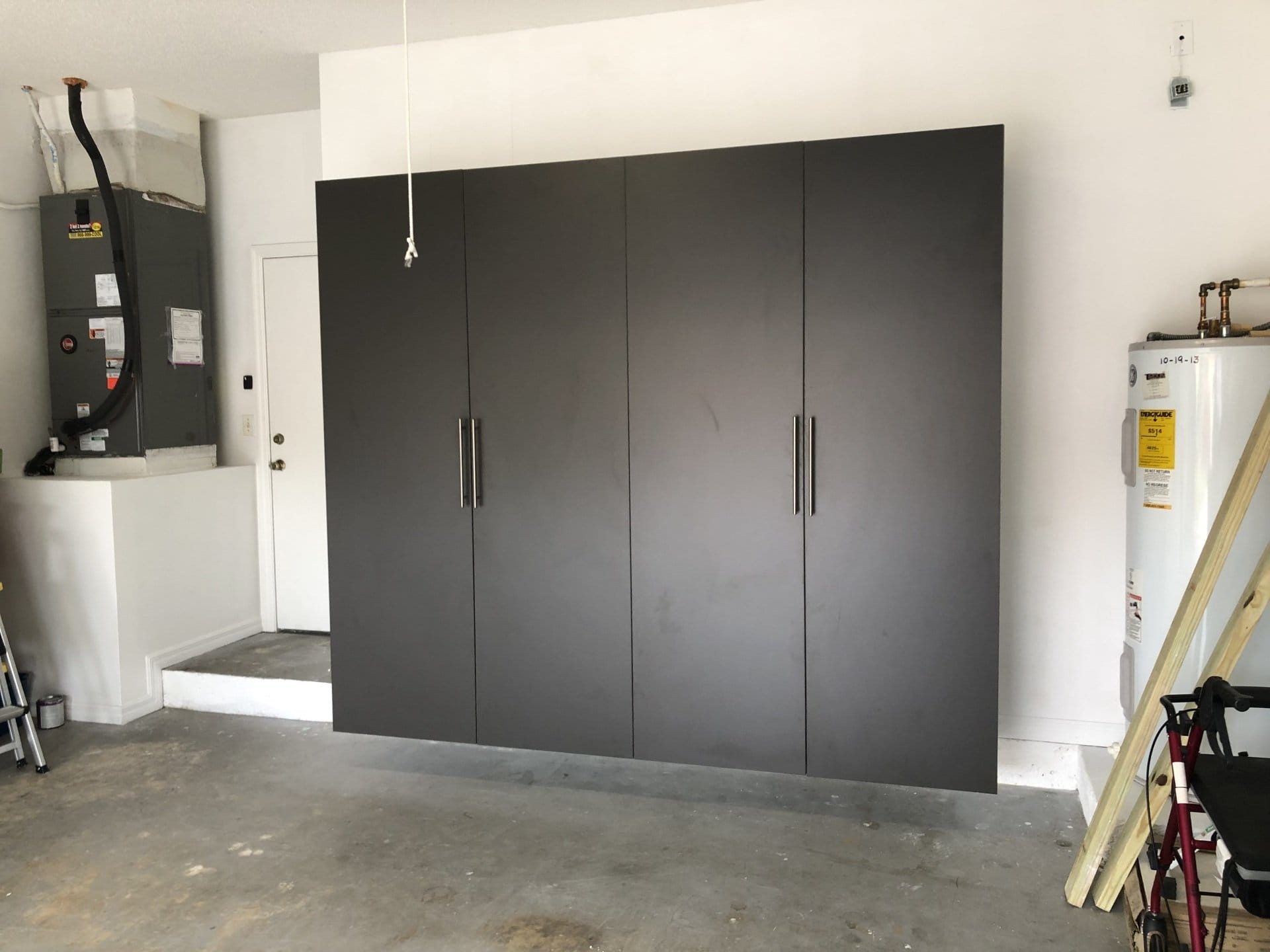
Set up your garage before June 1, when the Atlantic hurricane season starts. Keep storm panels and their hardware labeled near the door, store supplies in sealed bins off the floor, keep fuel in approved containers away from the water heater, and leave a clear path to roll the generator outside. Never run a generator in the garage.
A well-planned garage storage system puts everyday things on the walls and ceiling, so the floor is free when storm prep starts. We design them across Broward and southern Palm Beach County, including garage storage systems in Coral Springs, where we're based. The safety guidance below comes from federal and Florida agencies, linked at each step.
Key takeaways
- The National Hurricane Center lists the season as June 1 to November 30, peaking around September 10.
- Store panels in the order you'll hang them, with each one's hardware in a labeled bin.
- Never run a generator in a garage, even with the door open, and never store gasoline near a fuel-burning appliance such as a gas water heater.
- Keep food, medicine and documents inside the house; keep hardware, tools and the generator in the garage.
- Get everything off the slab. No cabinet is floodproof, but contents up on the wall stay out of shallow water.
Why storm season changes how the garage works
The garage becomes the staging area. Ready.gov tells you to bring in outside furniture before a storm, and patio sets, umbrellas and planters usually land on the garage floor. If that floor is already full, prep turns into a scramble.
The garage door matters too. According to the Federal Alliance for Safe Homes (FLASH), post-storm investigations show that more than 90% of house damage in severe wind events begins when garage doors separate from their mounting, collapse or cave in. FLASH suggests checking the door's brackets and its wind-rating label, and bracing a door that isn't wind-rated. Keep the space in front of the door and its tracks clear so braces can go in quickly.
What goes in the garage, and what stays inside
| Item | Where | How to store it |
|---|---|---|
| Storm panels and shutter hardware | Garage | Upright along a wall near the door, labeled by window; wing nuts and anchors in a labeled bin |
| Drill, bits, ladder, tarps, rope | Garage | On slatwall or in a cabinet next to the panels |
| Generator | Garage, never running | On the floor with a clear path to the door |
| Gasoline | Garage or shed, in approved containers | Away from the water heater and any other fuel-burning appliance |
| Water | Garage or inside | Low shelf or floor, since a gallon weighs over 8 pounds |
| Food, first aid, medicine | Inside | A cool, dry closet; Ready.gov says to keep canned food in a cool, dry place |
| Insurance papers and IDs | Inside | Waterproof container, kept high |
For quantities, Ready.gov recommends one gallon of water per person per day, and the Florida Division of Emergency Management recommends a kit that lasts at least seven days. That's 28 gallons for a family of four, which is a lot of weight and floor space to plan for.
Store shutters and panels in the order you'll hang them
Storm panels are bulky and awkward, and the hardest part of putting them up is finding the right one. Number each panel to match its window, store them upright along a side wall near the door in that order, and keep the hardware and a drill in one labeled bin beside them.
Overhead racks are good for light, bulky seasonal things, such as coolers and empty bins, that free up wall space for the panels. Our overhead racks are placed so they don't interfere with the garage door, and the framing above has to be sound. Izzy B. wrote that because the beams and studs weren't aligned when the house was built, the installers "had to add their own reinforcement to make it safe."
Generators and fuel: the rules that matter most
- Never run it inside. The CDC warns never to use a generator inside your home, garage or carport, and to keep it at least 20 feet from doors and windows. CPSC adds that this holds even with ventilation.
- Let it cool before refueling. Ready.gov notes that fuel spilled on hot engine parts can ignite.
- Store fuel away from the water heater. The Consumer Product Safety Commission says never to store gasoline in the home or near a fuel-burning appliance, such as a natural gas water heater in a garage.
- Install carbon monoxide alarms. Ready.gov recommends a working detector on every level of your home.
Store the generator where it can roll straight out the door, and plan the fuel cans' spot on the opposite side of the garage from any gas appliance.
Water heaters, flooding and the garage floor
If your water heater lives in the garage, keep the area around it clear. The CDC lists the water heater tank as a source of clean water in an emergency, so you need to reach its drain valve. After a flood, CPSC warns not to use gas appliances that have been submerged, and Ready.gov says not to touch electrical equipment that is wet.
FEMA's Protect Your Property From Flooding recommends raising water heaters and other utilities at least 12 inches above the base flood elevation, a job for a licensed plumber. It also says to keep valuables and documents in waterproof containers above that level. Find your flood risk on FEMA's Flood Map Service Center and your evacuation zone on the state's Know Your Zone page.
Our garage cabinets mount on the wall, which keeps the cabinets and their contents off the slab and lets you sweep underneath. They're wood with a melamine coating that resists moisture, with stainless steel hardware. No cabinet is waterproof, though, so keep anything irreplaceable inside and up high.
A pre-season checklist for May
- Check the garage door's brackets, track and wind-rating label, and decide where braces will go.
- Count panels and hardware, and replace missing wing nuts.
- Run the generator outdoors per its manual and check your fuel containers.
- Restock water and supplies for at least seven days.
- Clear a floor zone for patio furniture.
- Move documents inside to a waterproof container, and test your carbon monoxide alarms.
Plan a storm-ready garage
The best time to set up a garage is before the season starts. Book a free in-home design consultation: your designer measures the garage, plans cabinets, racks and slatwall around a clear floor zone, a panel wall and a path for the generator in a 3D design with you, and gives you a quote. We work across the area, including Fort Lauderdale garage storage. For year-round advice, read what not to store in your garage.
Sources
All accessed October 9, 2026.
- National Hurricane Center, Tropical Cyclone Climatology.
- Ready.gov, Hurricanes, Build a Kit, Power Outages and Floods.
- Florida Division of Emergency Management, Plan and Prepare and Know Your Zone, Know Your Home.
- FEMA, Flood Map Service Center.
- CDC, Avoiding Carbon Monoxide Poisoning and How to Find Clean Water in an Emergency.
- U.S. Consumer Product Safety Commission, post-storm hazards from generators, candles and wet appliances, August 12, 2004.
- FEMA, Protect Your Property From Flooding, 2023.
- Federal Alliance for Safe Homes (FLASH), Strengthen Your Garage Door, May 2025.
Frequently asked questions
- Should I store hurricane shutters in the garage?
Yes, most people do, and it works well if the panels are easy to reach. Store them upright along a wall near the door, numbered to match each window, with the hardware and a drill in one labeled bin. Lighter seasonal items can go on an overhead rack to free that wall space.
- Can I keep a generator in my garage?
You can store it there, but never run it there. The CDC warns against using a generator inside a home, garage or carport and says to keep it at least 20 feet from doors and windows. CPSC adds that ventilation doesn't make indoor use safe. Park it near the door with a clear path so you can roll it out.
- Where should I store gasoline for a generator?
In approved, properly labeled containers, outside the living space and away from anything with a flame or pilot light. The Consumer Product Safety Commission specifically warns against storing gasoline near a fuel-burning appliance such as a natural gas water heater in a garage. Store only what you need.
- How much water should I store for hurricane season in Florida?
Ready.gov recommends one gallon per person per day, and Florida's Division of Emergency Management recommends supplies for at least seven days. That's seven gallons per person. Water is heavy, at over 8 pounds a gallon, so store it on the floor or a low shelf, out of direct sun.
- Will garage cabinets protect my things in a flood?
They help with shallow water, but nothing in a garage is floodproof. Our cabinets mount on the wall, which keeps the boxes and their contents off the slab. If your home is in a flood zone, follow FEMA's advice: keep valuables and documents in waterproof containers above the base flood elevation, ideally inside the house.
See your closet in 3D before anything is built.
Every free in-home design visit includes a 3D design of your space. Your designer measures, draws it with you and gives you a quote.
- 4.9 from 84 Google reviews
- Same-as-cash financing available
(954) 900-9983Office Mon–Fri 10–5, Sat 10–4