

Garage Floor Tiles vs. Epoxy in Florida Heat and Humidity
Dave Kushner6 min read
Filed underSwisstrax garage floor tiles
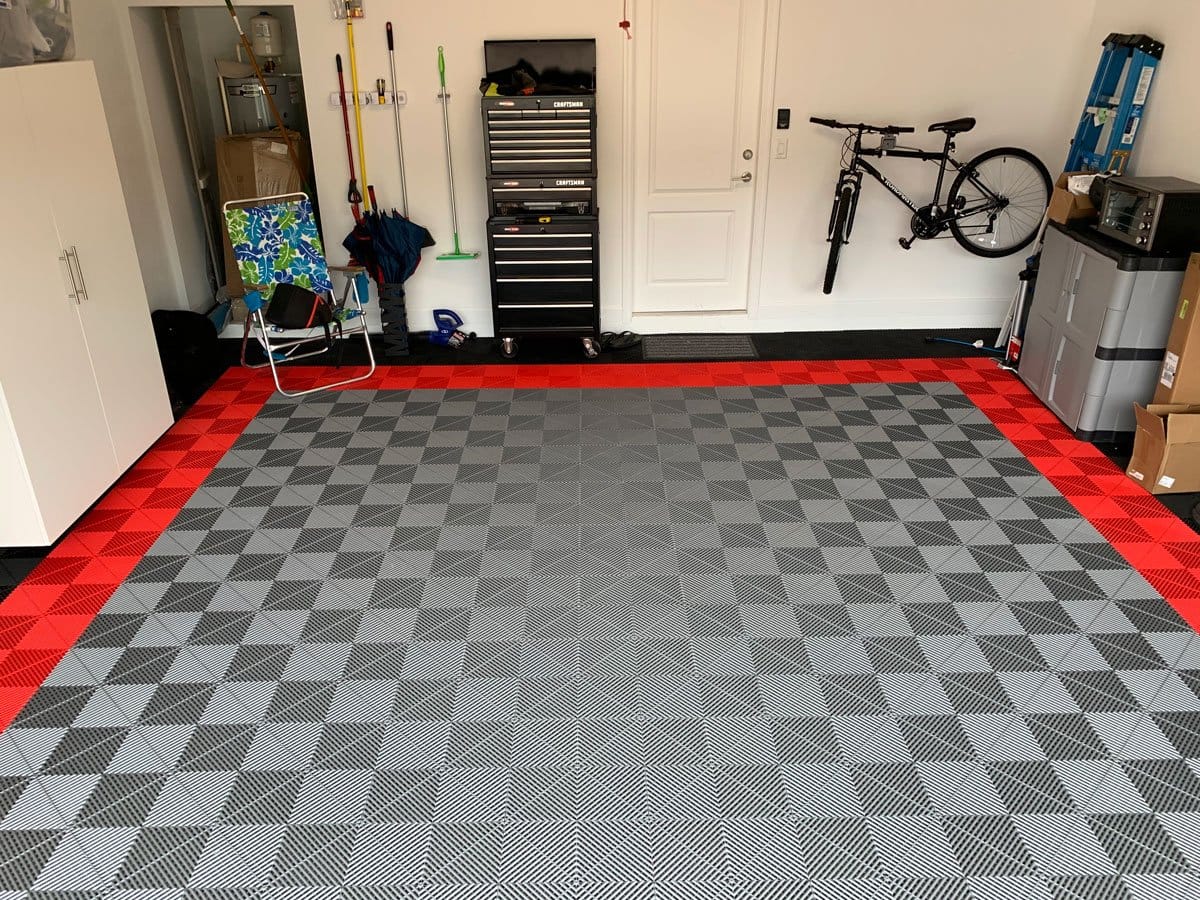
For most South Florida garages, interlocking tiles such as Swisstrax are the more forgiving choice: they sit on top of the slab, vented styles let water drain underneath, and they install in hours. Epoxy gives a smooth, continuous finish, but it needs dry, well-prepared concrete, the right temperature and humidity to cure, and days before you park on it.
We install Swisstrax garage floor tiles, so read this knowing which side we sell. We've kept it fair, with sources for both floors. Flooring is one part of a full garage storage system; for the case for tiles in general, see why modular flooring is a smart garage investment.
Key takeaways
- Tiles float over the concrete, so a stained slab doesn't show, and Swisstrax says you can drive on them as soon as they're down.
- Epoxy bonds to the concrete, so it needs a clean, dry, etched slab and a cure of up to several days.
- A common DIY epoxy kit is rated for 60 to 85°F. South Florida summer afternoons run hotter, so timing matters.
- Standard epoxy yellows in sunlight unless it gets a UV-stable topcoat. Tiles expand in heat and need a gap at the walls.
- Tiles are textured and drain; a glossy coating can get slick when wet.
How each floor works
Interlocking tiles
Tiles snap together over the existing slab without adhesive. Swisstrax lists its Ribtrax Pro tile as polypropylene copolymer, 15.75 inches square and 0.75 inches thick, made in Dalton, Georgia. Ribtrax Pro tiles are perforated, with channels underneath, so water and debris pass through and can be rinsed or vacuumed out. Solid styles, such as Diamondtrax, don't drain through the surface.
Epoxy coatings
Epoxy is a two-part coating mixed on site and rolled onto the concrete, often with decorative flakes. Rust-Oleum's EpoxyShield technical data sheet, for a popular DIY kit, calls for cleaning, degreasing and etching first, and grinding or shot blasting if the floor was ever sealed. Professional systems use different products and steps, so ask any installer exactly what they apply.
Tiles vs. epoxy, side by side
| Interlocking tiles (Swisstrax) | Epoxy coating (DIY kit example) | |
|---|---|---|
| Install time | "Installs in a few hours," per Swisstrax | Prep, etch and dry, then 24 hours before foot traffic and 3 days before cars (at 70 to 80°F) |
| Slab prep | Sweep and clean; tiles acclimate 24 hours at 72°F or above | Clean, degrease, etch; new concrete must cure 28 days first |
| Moisture in the slab | Tiles float above it; vented tiles let water drain beneath | Kit not intended for floors with a moisture problem |
| Weather on install day | Nothing has to cure | 60 to 85°F, humidity no higher than 85% |
| Sun | UV-stabilized, but needs an expansion gap | Standard epoxy yellows and loses gloss in sunlight unless topcoated |
| Wet grip | Textured; vented tiles drain | Smooth gloss can be slippery; flakes or grit help |
| Repairs | Lift out and replace a tile | Patch or recoat |
| If you move | Swisstrax says you can take the floor with you | Stays with the house |
| Look | Colors, borders, checkerboards, logos | Solid color or flakes |
Sources for the table: Swisstrax's Ribtrax Pro page, installation guide and Swisstrax vs. epoxy page; Rust-Oleum's EpoxyShield data sheet; and PCI Magazine on epoxy yellowing.
What Florida heat and humidity do to each floor
Heat on install day. The EpoxyShield sheet says to apply only when air, material and surface are between 60 and 85°F, with the surface at least 5°F above the dew point and humidity no higher than 85%. In warm weather it recommends painting before 9 a.m. The National Weather Service's 1991–2020 normals for Fort Lauderdale–Hollywood International Airport put the normal daily high at 89 to 91°F from late June through August. A DIY kit is a cooler-month or early-morning job here.Moisture coming up through the slab. A bonded coating needs dry concrete. Rust-Oleum's Moisture Stop data sheet describes a simple test: tape a 2-by-2-foot sheet of plastic to the floor for 24 hours. Droplets under the plastic or darker concrete mean moisture is trapped in the slab. Tiles are less sensitive because they float, but Swisstrax's warranty still excludes damage from excessive moisture and hydrostatic pressure from the subfloor, so a wet slab needs attention either way.Summer storms. Wind pushes rain under the door. Swisstrax tiles are textured, and with vented styles the water runs beneath them and drains out or evaporates. A smooth coating stays wet on top until you squeegee it.Sun through an open door. PCI Magazine calls yellowing and gloss loss in sunlight a well-known limitation of standard epoxy, which is why many systems add a topcoat. Tiles expand in heat: Swisstrax's installation guide calls for a gap of at least 1/4 inch at the walls for Ribtrax and 1/2 inch for its other tiles, and its warranty excludes damage from extended direct sun.
Which floor fits your garage
Tiles make more sense if you park in the garage every day and can't give up the space for days, your slab is stained or worn, you want a pattern or border, or you may move and want to take the floor along.Epoxy makes more sense if your slab is dry and sound, you want a continuous surface you can squeegee, and you can schedule the work in cool, dry weather. Expect to recoat eventually; Swisstrax says epoxy needs refinishing every few years.Either way, plan the cabinets first. Our garage cabinets mount on the wall, so the floor runs underneath and stays easy to clean. Our project gallery shows our cabinet installs over both Swisstrax tiles and epoxy-coated floors. If you choose tiles, our Swisstrax cleaning guide covers upkeep.
See the floor and the cabinets together
Book a free in-home design consultation. We'll look at your slab, show you Swisstrax tile styles and colors, lay the floor and cabinets out in a 3D design with you, and give you a price quote.
Sources
All accessed October 9, 2026.
- Swisstrax, Ribtrax Pro, How to Install Swisstrax Tile Systems, Swisstrax vs. Epoxy and Warranty.
- Rust-Oleum, EpoxyShield Water-Based Epoxy Garage Floor Coating technical data (ESH-09) and Moisture Stop technical data (ROC-113).
- Matthew Sumpter, Mingbo He and Dan Weinmann, Lower Yellowing Epoxy System for Improved Sustainability of Concrete Coatings, PCI Magazine, April 2023.
- National Weather Service Miami, Daily Normals (1991–2020), Fort Lauderdale.
Frequently asked questions
- Are garage floor tiles better than epoxy in Florida?
For most South Florida garages, tiles are more forgiving. They float over the slab, drain water from summer storms, install without a cure time and don't depend on the weather that day. Epoxy can be a good, durable finish on a dry, sound slab when it's applied in the right conditions. The best choice depends on your slab and how you use the garage.
- How long before I can park on a new garage floor?
With interlocking tiles, Swisstrax says you can drive on the floor right after installation. Epoxy needs time to cure: Rust-Oleum's EpoxyShield kit lists 24 hours before foot traffic and 3 days before vehicles at 70 to 80°F and 50% humidity. Professional coating systems vary, so ask your installer.
- Does epoxy turn yellow in the sun?
Standard epoxy does. PCI Magazine describes yellowing and gloss loss under sunlight or strong indoor light as a well-known limitation, which is why many systems add a UV-stable topcoat. If your garage door is open often or faces the afternoon sun, ask any coating installer what topcoat they use.
- Do Swisstrax tiles get slippery when wet?
They're designed not to. The tile surface is textured, and on vented styles such as Ribtrax Pro, perforations and channels underneath let water run below the surface and drain or evaporate instead of pooling on top. That helps when summer rain blows under the garage door or you rinse the floor with a hose.
- Do garage floor tiles trap moisture or mold underneath?
The channels under vented Swisstrax tiles let water drain and air move, and tiles can be lifted anywhere to clean beneath them. They don't fix a wet slab, though: Swisstrax's warranty excludes damage from excessive moisture and hydrostatic pressure from the subfloor. If your slab tests damp, address the source before choosing any floor.
See your closet in 3D before anything is built.
Every free in-home design visit includes a 3D design of your space. Your designer measures, draws it with you and gives you a quote.
- 4.9 from 84 Google reviews
- Same-as-cash financing available
(954) 900-9983Office Mon–Fri 10–5, Sat 10–4